Dr. Matt Johnston says “Advocacy Works”
ODA Helps Grants Pass Dental Assistant Break Through Red Tape to Achieve Licensure Reciprocity
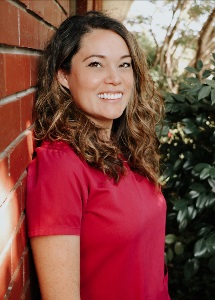
When Karla Brumley and her family moved to Grants Pass in 2023, she was looking forward to continuing the career she had built in California as a Registered Dental Assistant in Extended Functions (RDAEF). As it turns out, that transition wouldn’t be as simple as she had expected, due to layers of bureaucracy and a challenging licensure system in her new home state.
“Back in California, I had a mentor who had encouraged me to get into restorative dentistry,” said Karla, who graduated from the University of the Pacific’s RDAEF program in the San Francisco area.
When her family moved north to Oregon to be closer to family, she hoped to jump back into doing the restorative dentistry she enjoyed with a practice in Grants Pass. She completed Oregon’s requirements to be certified as an Expanded Function Dental Assistant (EFDA) while asking the state to recognize her California RDAEF education and restorative training.
That’s when her challenges began.
“They kept referring me back to the classes and training and experience I already had,” said Karla. “We went in circles for nearly three years.”
Karla eventually completed Oregon’s requirements to earn her EFDA certification, but Oregon continued to reject her requests to recognize her restorative training, telling her she had to redo the education she had received in California. Completing that same training a second time was frustrating enough, but she soon learned there was no local option to repeat the restorative training she had already completed in California. The only option for that restorative training was nearly two hours away in Eugene.
“I had already completed an 8-month course and compared the hours from Oregon to California, and my 410 hours in California way exceeded Oregon’s 68-hour requirement for my restorative education,” said Karla. “Because of that drastic difference, I just wanted my credentials to be given a fair look to see whether my training could be recognized, but I kept hitting roadblocks.”
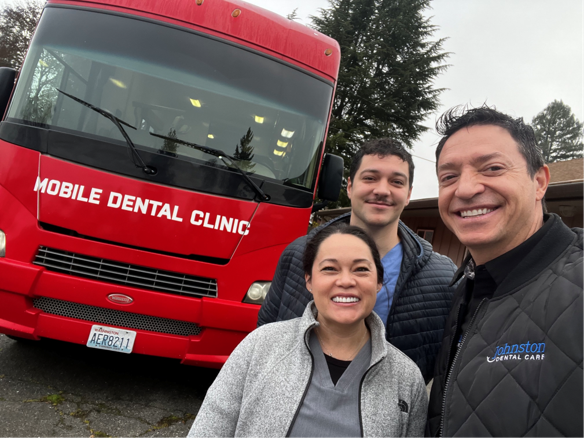
After nearly three years, Karla began working for Dr. Matt Johnston in Grants Pass, who she says played a key role in helping her break through the red tape surrounding recognition of her restorative training.
“I asked her to show me her skills, and I quickly recognized that she knew what she was doing,” said Dr. Johnston. “She had quite a knowledge of the materials, so I looked into her training and saw this was something we could utilize in our office.”
Around that time, ODA Executive Director Barry Taylor reached out to Dr. Johnston and mentioned that he would be in the area and was interested in having dinner to learn more about how dentists were doing in the Grants Pass area.
“I was very impressed by how involved Barry is as president of the ODA and that he wanted to come have dinner with us,” said Dr. Johnston. “We met in person and he was very real. It meant a lot to me that he could look at us as a constituent and say, ‘You guys matter.’ That was a big deal. We started a dialogue about Karla’s challenges on that day.”
Barry said that the ODA was going to be discussing workforce shortages in Oregon that next day and started looking into how the ODA could help Dr. Johnston and Karla but soon ran into some of the same issues that Karla had.
“I had challenges getting my individual case fully reviewed,” said Karla. “The Dental Assisting National Board (DANB) explained that its authority was limited by the Oregon Board of Dentistry, while the Board said its authority was limited by DANB. We just kept going in circles.”
Soon after, Dr. Johnston attended the ODA’s Oregon Dental Conference, where he shared his frustrations with ODA Director of Government and Regulatory Affairs Brett Hamilton, who encouraged him to get involved with roundtable discussions taking place on the workforce shortage in Oregon.
“I was able to talk with DANB and members of the Oregon Board of Dentistry at the roundtable while I was in Portland and I’m really glad I did because it was a good way to listen to other things that were going on in dentistry,” said Dr. Johnston. “I said, ‘I know this isn’t going to matter, but this is one tiny example of a very trained individual who can’t work in Oregon’.”
The Oregon Board of Dentistry invited Karla and Dr. Johnston to present at their next meeting.
“We presented our case and the Board was very generous to listen to the situation and said, ‘I think we can make this happen’,” said Dr. Johnston. “They said ‘We’re going to have a committee that will talk about the requirements and a committee to talk about California requirements and see how they can be adjusted’.”
Dr. Johnston expected the process to take at least a year and was surprised when the Board met two months later and told Karla that they’d like to work with her to verify her California training through Oregon’s out-of-state work experience pathway.
“They approved my school and the program that I graduated from,” said Karla. “I was excited to see that not only was I approved and able to move forward, but also that future graduates of my program would have a pathway. That really made me happy that we paved the way for them too.”
“That’s how you make change,” said Brett about the work Karla did to advocate for herself with the Board of Dentistry. “You change the system to help others.”
“I was especially grateful for those on the board who commended my perseverance,” said Karla. “That really made me feel validated and it was sincere and not just about business.”
“It was really cool to see that we’re not just a number here in Southern Oregon,” said Dr. Johnston. “But it mattered to the ODA that we could accomplish our goals.”
Thanks to the joint advocacy work of Karla, Dr. Johnston, and the ODA, Karla is now able to perform restorative functions in Oregon, including working with Medical Teams International to support underserved populations in their community.
“It was very clear from our experience that advocacy works,” said Dr. Johnston. “I’ve been paying my ODA dues for years because I believe in the work they do. I’m an advocate for the ODA because it makes sense to work with those who can help the many. The ODA continues to be successful in these situations, and I’d encourage others to do the same.”
“We’re here to assist and help with the process,” said Brett. “You should practice dentistry and we should take care of knocking down barriers for you, and if you’re willing to engage, at the end of the day, you can change a system like Karla and Dr. Johnston did.”
Karla says that after years of being sent in circles, there were times when she didn’t want to keep advocating for herself. After hitting so many barriers, she eventually signed up for coursework toward a different career path because she could not continue performing the restorative functions she loved.
“I know other people didn’t pursue recognition of their training like I did,” said Karla. “I’m thankful for Dr. Matt because he really helped push it forward and make it happen. How many assistants who hit those barriers gave up and left the dental field altogether?”
“To assistants who believe their training meets Oregon’s standards: compare your education and experience with the requirements. If you believe your credentials deserve a closer review, keep pushing forward and don’t give up. There are resources and people willing to listen.”
Ultimately, Karla and Dr. Johnston expressed their gratitude for the assistance of the ODA in navigating DANB and the Oregon Board of Dentistry and encouraged fellow dental professionals to get involved with the ODA or their local component dental society and participate.
“If this experience showed us anything, it’s that advocacy works,” said Dr. Johnston.